Most founders ask the same first question: how long until I have something real? This guide explains how TechNamah gets from idea to launch, what happens in each stage, and what makes a project faster or slower.
What is an MVP?
An MVP (minimum viable product) is the smallest version of your product that real users can use and pay for. It solves one core problem well, so you can learn from the market before you invest in the full roadmap.
An MVP is not a demo or a mock-up. It is a working product, built to grow: every system TechNamah ships is built to handle 10× the current load, with no rewrites when you grow.
How does TechNamah build an MVP?
TechNamah builds an MVP in four stages, and you see working results at the end of each one.
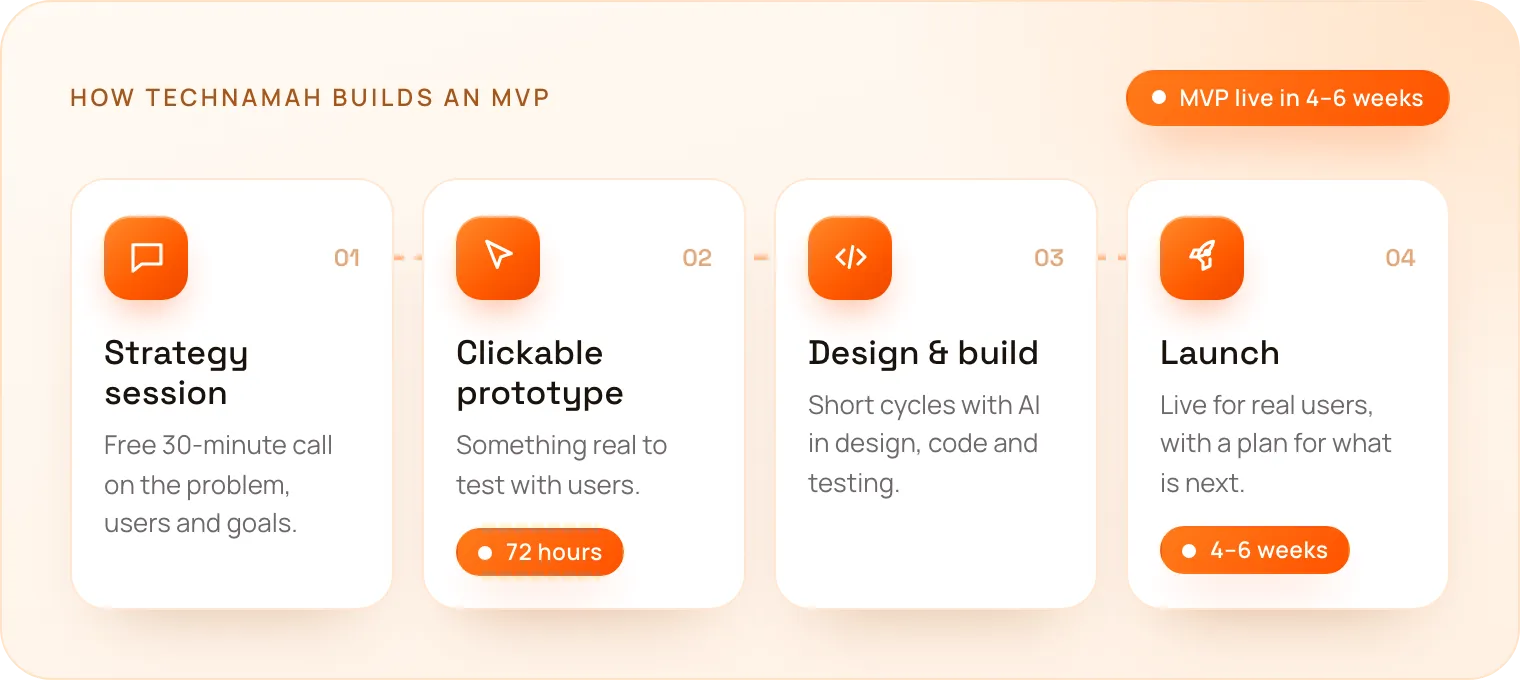
- Strategy session. A free 30-minute call to understand the problem, the users and what success looks like.
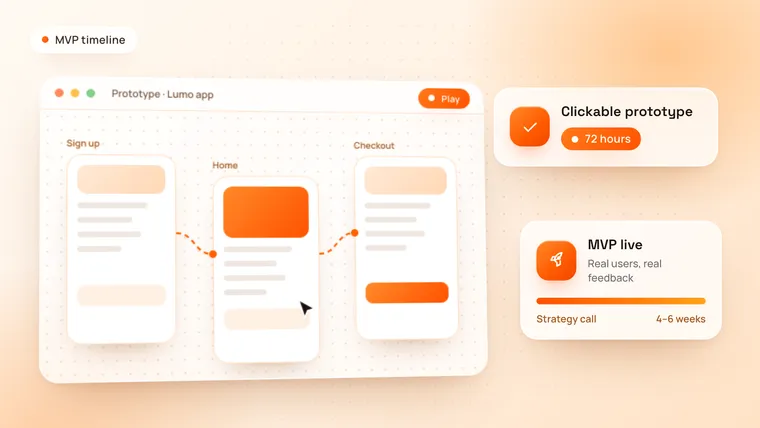
- Clickable prototype. Within 72 hours you get a prototype you can click through and show to users.
- Design and build. The product is designed and engineered in short cycles, with AI across design, code, testing and deployment.
- Launch. The MVP goes live and is ready for real users, with a plan for what comes next.
What makes an MVP take longer?
Three things move the timeline most:
- Scope. Every extra feature adds design, build and testing time. The fastest MVPs do one job very well.
- Integrations. Payments, third-party APIs and existing systems add work that depends on someone else’s documentation and access.
- Feedback speed. Decisions that wait for days stretch the project. Quick, clear feedback keeps it on schedule.
Is a website faster than an MVP?
Yes. A basic website takes 1–2 weeks, because it presents a product instead of being one. If you need a launch page to collect early sign-ups while the MVP is built, the two can run side by side.