- Client
- SaaS Startup
- Industry
- Inventory & Supply Chain
- Services
- Brand · UX/UI · Web App
- Tools
- Figma, React Js
- Sprints
- 6 Design Sprints
- Year
- 2025
Overview
About the Project
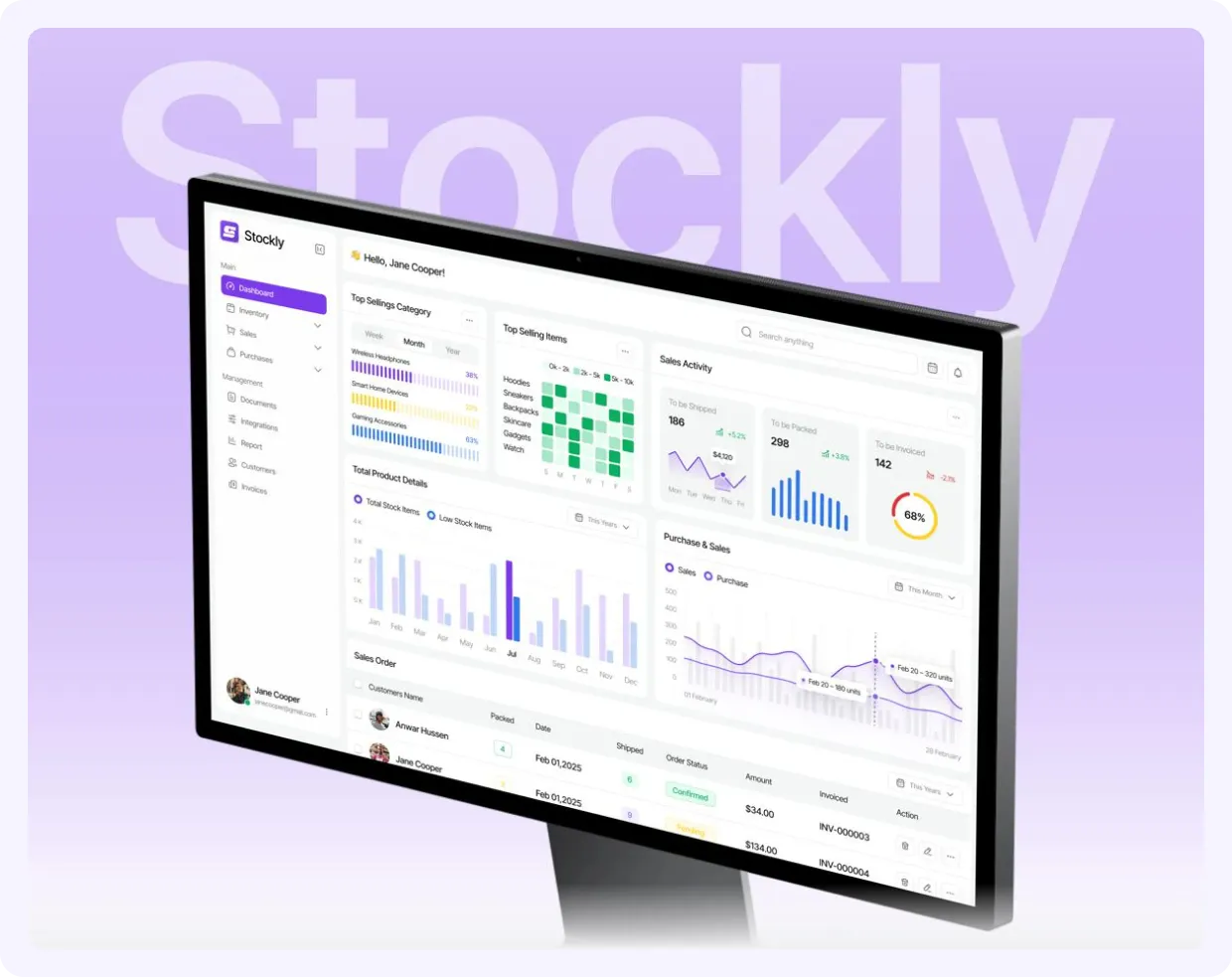
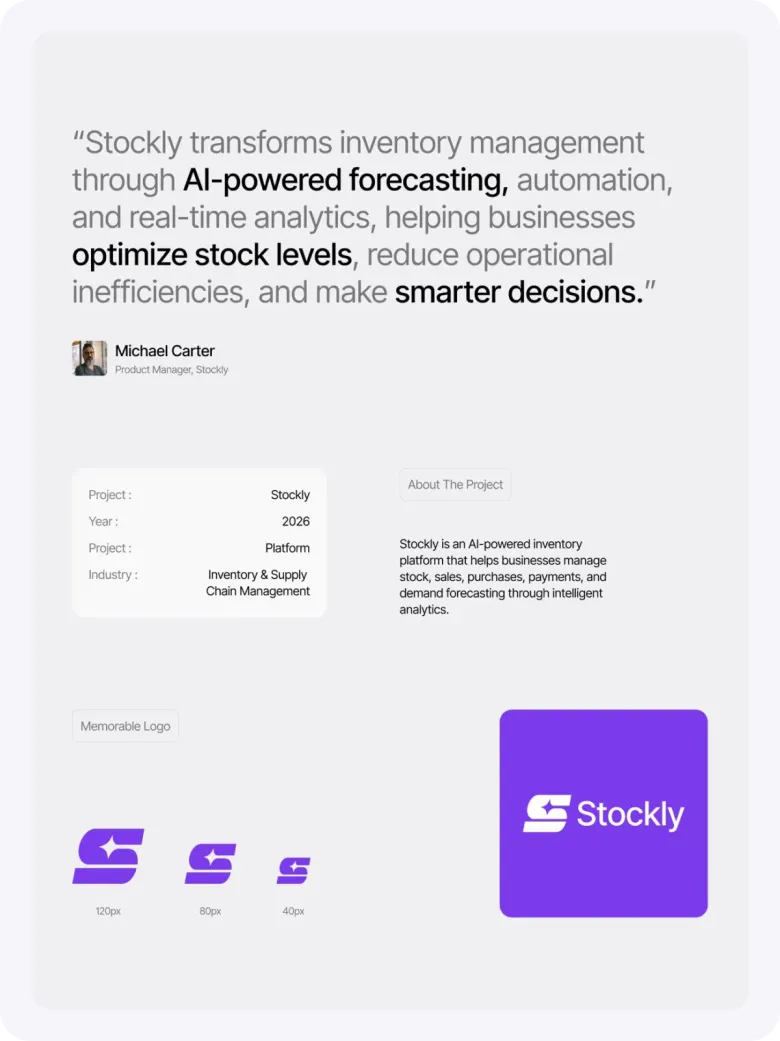
Stockly is an AI-powered inventory platform that helps businesses manage stock, sales, purchases, payments, and demand forecasting through intelligent analytics. We designed the complete product brand identity, design system, and every core workflow across 6 design sprints.
The Challenge
Research Before Pixels
Industry research and workflow analysis surfaced the opportunity: 73% of organizations will adopt AI inventory forecasting within two years, and 18k businesses already run daily operations on inventory platforms, yet teams still struggle with stock visibility, manual tracking, and fragmented workflows.
Usability Testing
Validated With Real Users
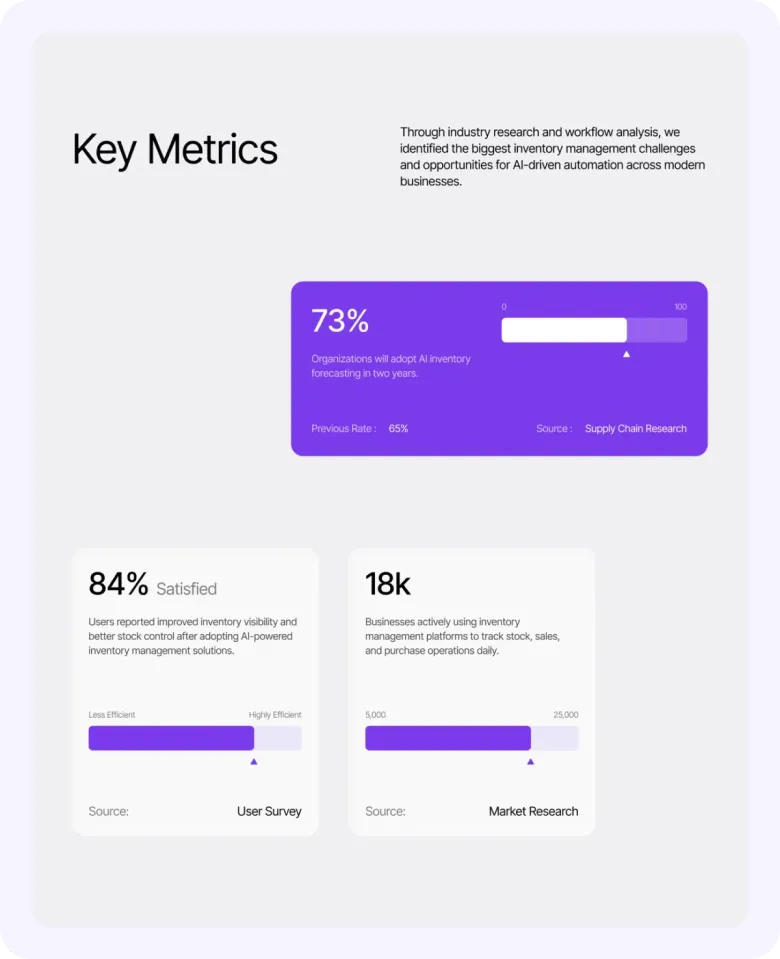
Three phases shaped the product: research revealed the visibility and tracking pain points; process analysis centralized inventory, sales, and purchasing into one platform; and AI forecasting turned inventory data into actionable recommendations.
Brand Identity
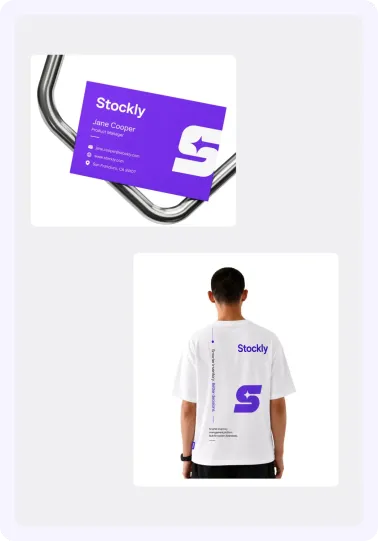
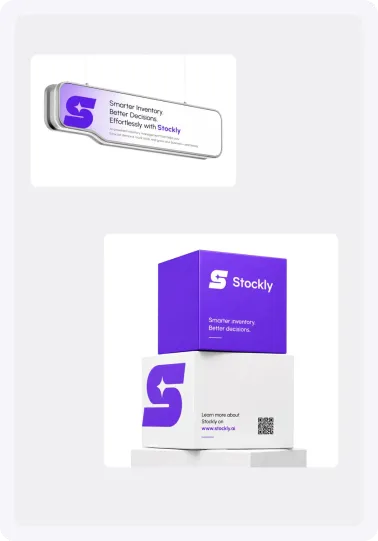
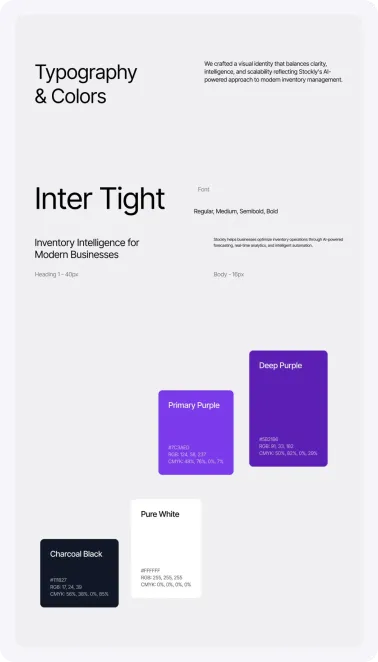
Clarity, Intelligence, Scalability
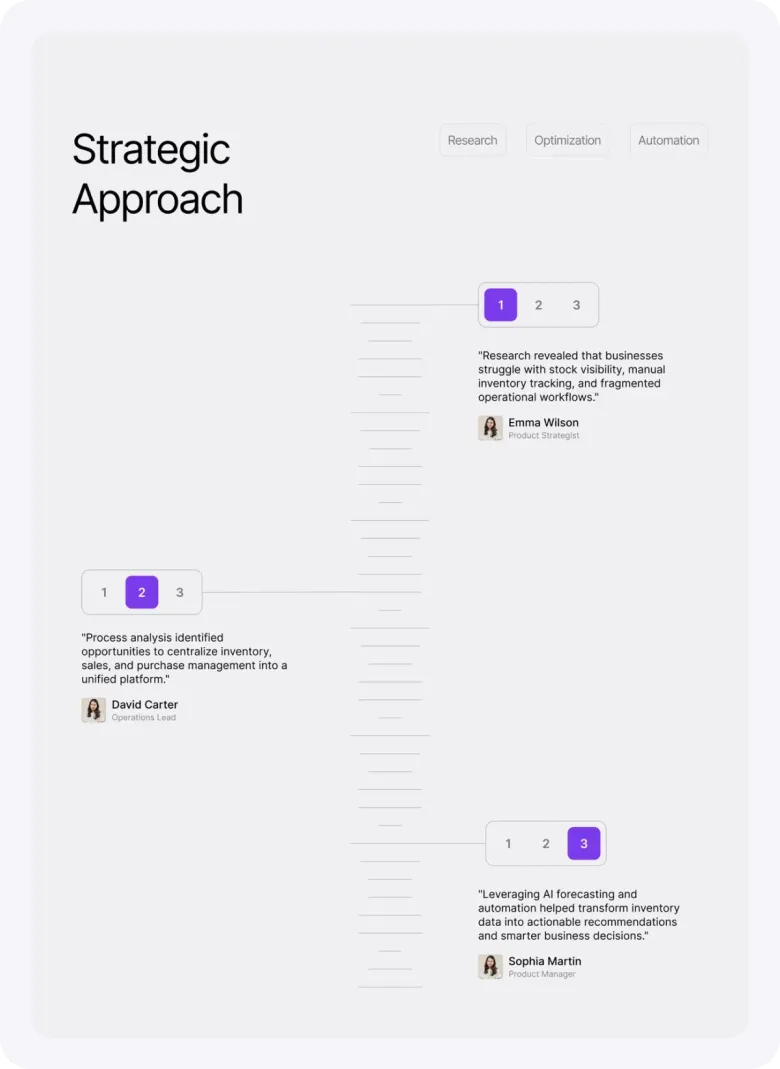
Inter Tight typography and a confident purple system (#7C3AED / #5B21B6): a visual identity that reflects Stockly's AI-powered approach to modern inventory management.
The Product
Designing the Inventory Workspace
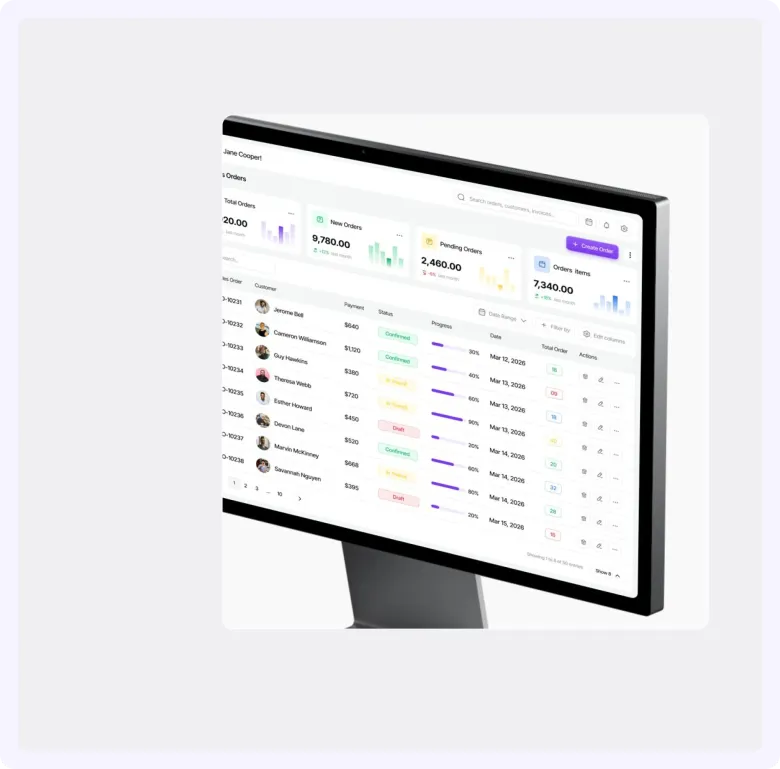
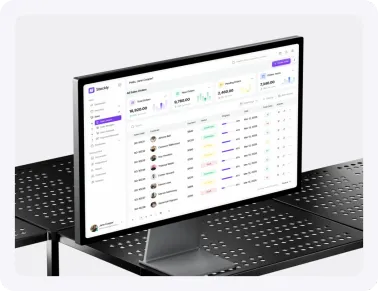
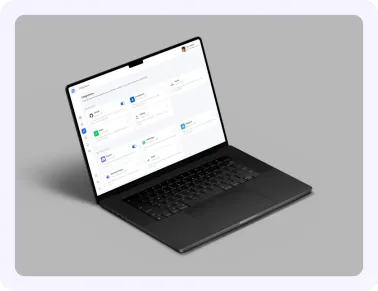
Dashboard, sales orders, purchases, integrations, and reporting, every core workflow designed to stay clean under real operational data.
Strategic Approach
Research. Optimization. Automation.
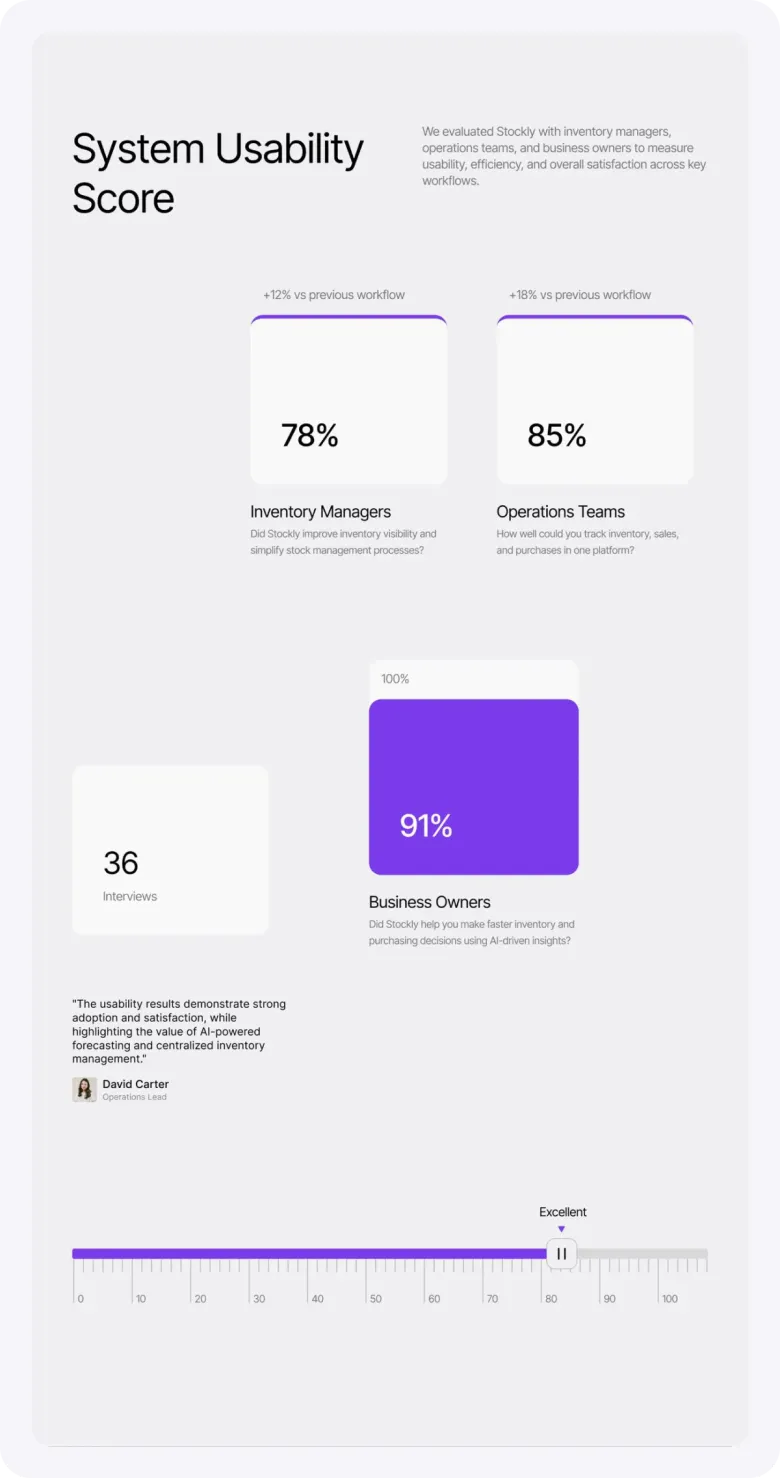
We evaluated Stockly across 36 interviews with inventory managers, operations teams, and business owners. System usability scored 78% with inventory managers (+12% vs previous workflow), 85% with operations teams (+18%), and 91% with business owners: an overall rating of Excellent.
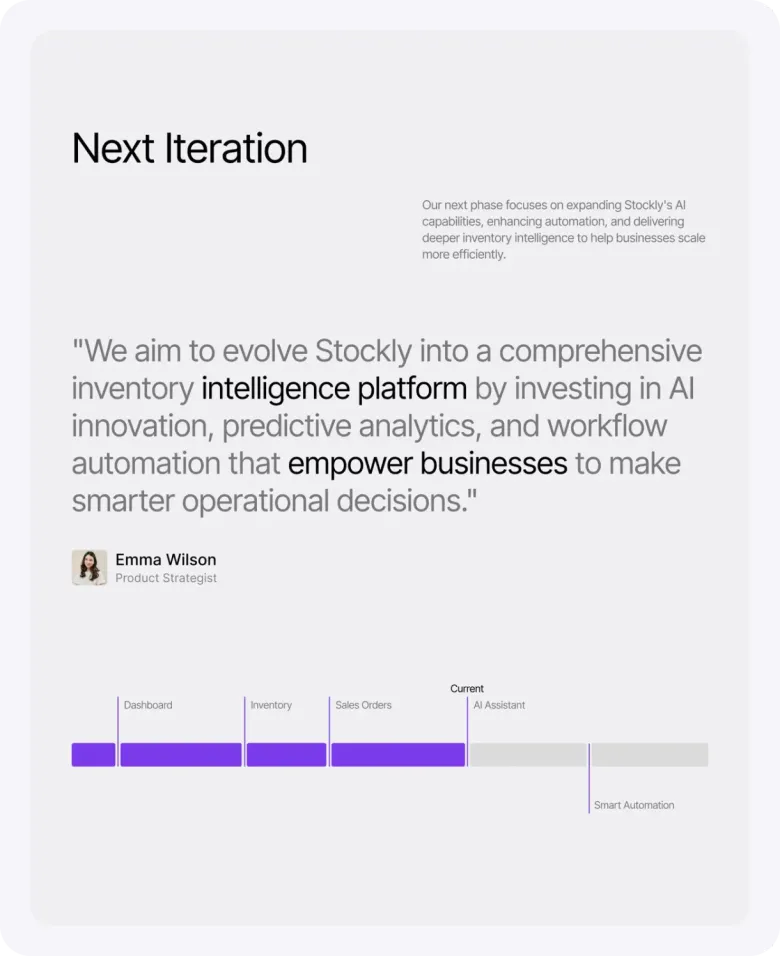
Next Iteration
Built to Keep Evolving
The next phase expands Stockly's AI capabilities (deeper automation and inventory intelligence), evolving the product from a management tool into a comprehensive intelligence platform with predictive analytics and workflow automation.
The Outcome
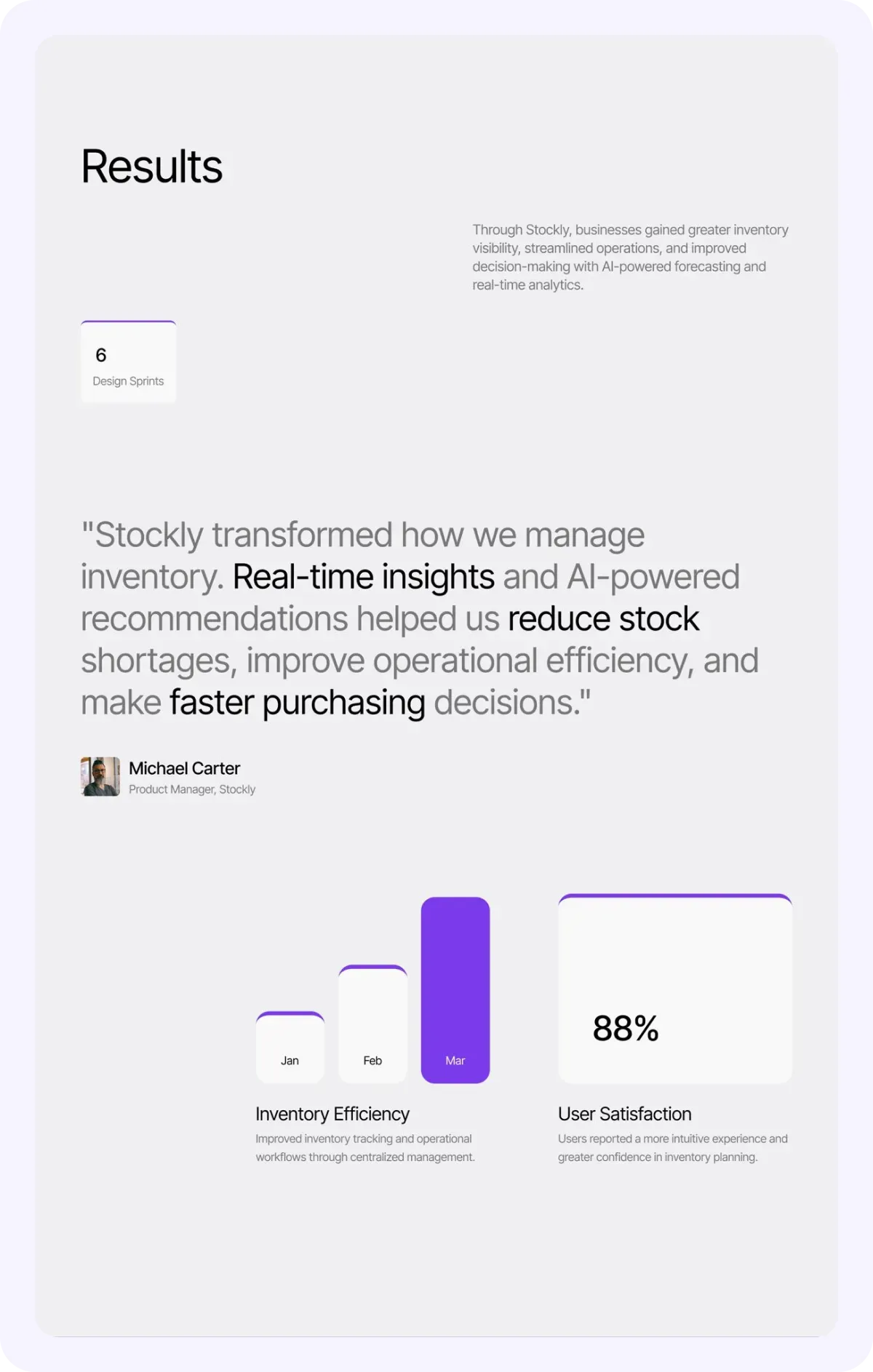
The Results
- Concept to production-ready design
- 3 Weeks
- Designed across the full app
- 81 Screens
- Design system consistency
- 100%
Got Questions
Frequently Asked Questions
How long does it take to design a SaaS website?
A basic website takes 1–2 weeks. A SaaS site that also needs a new brand identity and product screens takes longer; Signvex went from brand to launch-ready design in 4 weeks. We confirm your timeline after a free 30-minute strategy call.
Can TechNamah design the brand, product UI, and website together?
Yes. We design the brand identity, the product interface and the marketing website as one system, so typography, colour and components stay consistent everywhere. Signvex, Lead7 and NestAssure were all delivered this way, from the first logo sketch to a launch-ready website.
Why build a SaaS marketing site in Webflow?
Webflow gives a SaaS team a fast, responsive marketing site that the team can update without a developer, from new pages to pricing changes. We design the site in Figma and build it in Webflow, so the live site matches the approved design and stays easy to grow.